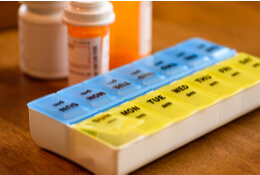
As you age, it may seem like the number of pill bottles on your dresser is multiplying. How can you keep track of your medications? Follow these tips to help take the hassle out of medication management.
Tip 1: Make a List of Medications
The National Institutes of Health recommends storing a medication list in your wallet or on your phone for easy access. Filling all your medicines at the same drugstore could make it easier for your pharmacist to determine any potential interactions. For each item, include:
- Prescribed dosage, the reason you take it and the number of times to take it each day.
- Special instruction. Should the drug be taken with food or on an empty stomach? Do you need to take medicine at a specific time each day?
- The drug’s name. If it’s a generic brand, call it by the name on the bottle. The FDA continually investigates complaints and will recall when needed.
Tip 2: Use the List You Made
Routinely discuss your medications with your doctor. Bring your medication record or pill bottles to each visit. This helps reduce the likelihood of drug interactions and other complications. Prepare a list of questions you would like to address, and let your doctor know if you’re experiencing side effects. Never stop taking a medication without talking with your doctor.
Tip 3: Stay Organized
A lot is going on in your world, and it can be hard to remember to take your medication. Dispensers or organizers allow you to group medicines by day or time. If you don’t have a pill organizer, the National Institutes of Health recommends using markers, stickers or colorful pill bottle caps to color-code your pill bottles.
Reminders
Another thing to remember is that certain foods reduce the effectiveness of prescriptions or cause potentially dangerous side effects. Here are a few to watch out for:
- According to the American Heart Association, vitamin K reduces the effectiveness of blood thinners used to prevent stroke. This nutrient is commonly found in leafy green vegetables, such as kale,
- According to the U.S. Food and Drug Administration (FDA), caffeine can enhance the stimulant effects of medications used to treat attention deficit hyperactivity disorder and counteract sleep aids.
- Check the label of your medication before considering that glass of wine. Using alcohol with some medicines can increase drowsiness and cause other impairments.
- Grapefruits and pomegranates can affect the way your body absorbs certain medications, including prescriptions for high blood pressure and high cholesterol levels.
- The FDA reports that chocolate, along with sausage, pepperoni, salami, bologna and aged cheese, causes dangerous spikes in blood pressure and interacts with a class of drugs known as monoamine oxidase inhibitors, which treat depression.